
Montrose County Arrest Log Window
One source stands out for weekend coverage in Montrose County. The sheriff publishes a consolidated MCSO blotter for June 5 through June 7. Its title sets a three-day window. Every activity entry in the post falls inside those posted dates. One booking block covers the whole span. Other weekends in Montrose County get similar posts. That helps when separate daily pages are missing. A multi-day format preserves context a same-day check lacks, since calls, locations, deputy actions, warrant events, agency labels, and bookings sit together across the full weekend. The official three-day MCSO arrest blotter appears on this page. Even so, the post remains a publication record. A person may already be released by the time anyone reads it, and someone booked near the edge of the window may appear in the next report.
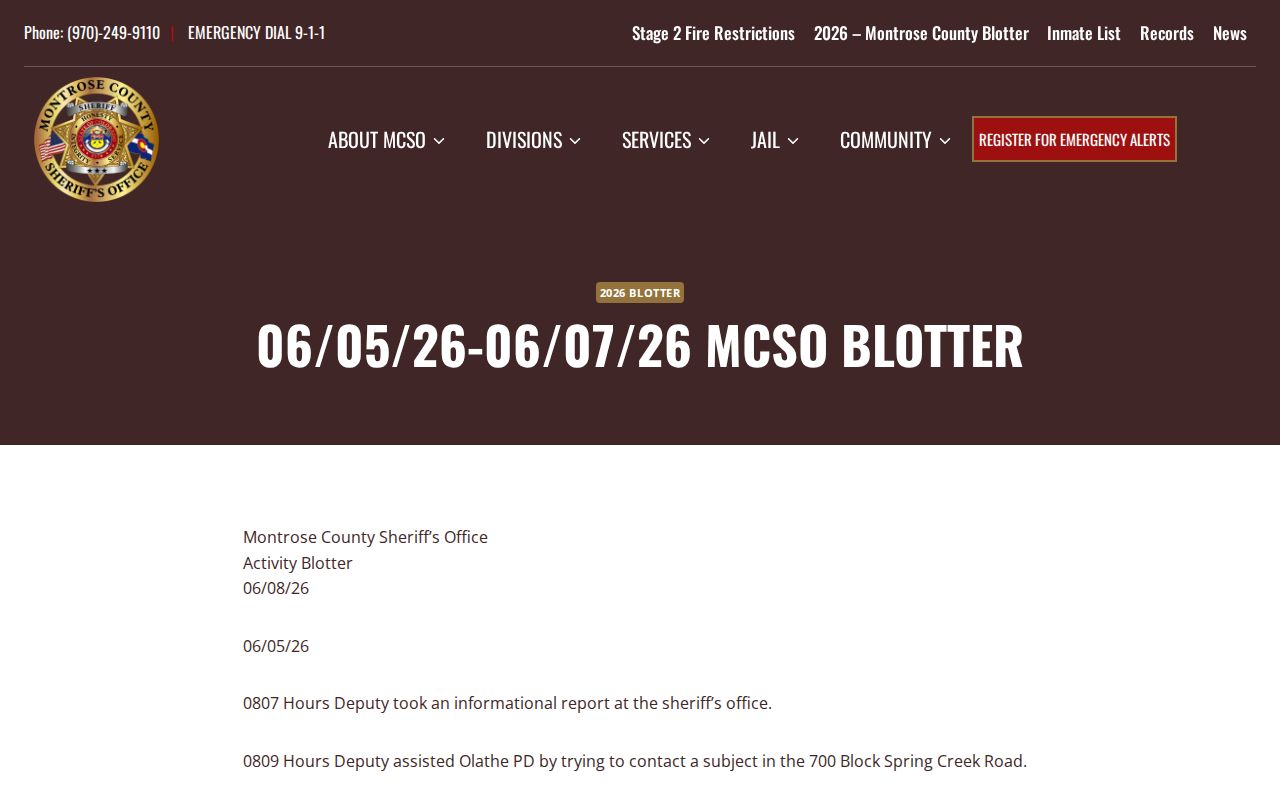
Write down the date range from the official heading next to any booking detail you pull from the report.
Read Montrose Arrest Blotters
Work backward by date, not like a live roster. The agency field matters most. Montrose PD, MCSO, and Olathe PD can all surface inside one county booking section. The arresting agency may differ from the jail that processed the person.
- Open the MCSO annual blotter archive and identify the post whose title spans the target dates.
- Read the activity lines first for event time, location, and narrative. A warrant arrest may appear only there.
- Review the separate booking block for name, date of birth, home city, agency, charge, and bond when shown.
- Compare neighboring posts when the event happened late Sunday or around midnight.
- Use 24 Hour Arrests for the newest daily window, or request the underlying record when the post is incomplete.
Save the exact URL and title. A search snippet can be stale or cut off. The official post is the better citation, while a records response makes the better durable copy.
Montrose Arrest Log Entry Fields
An MCSO log blends incident narratives with booking data. Keep the two apart. The compact comparison below mirrors the official structure.
| Published item | How to read it |
|---|---|
| Source date or range | The period named by MCSO, often one day or a consolidated weekend. |
| Event date, time, location | Incident context in the narrative, not necessarily the intake time. |
| Agency or deputy action | Who handled the incident or arrest; the county jail may still process intake. |
| Name, DOB, home city | Identity details observed in booking lines; verify before treating a person as a match. |
| Charges as published | Booking charges at that point, subject to later court change. |
| Bond | An amount or status when included, not confirmation of payment or release. |
| Photograph | No systematic official photo display was verified in the reviewed blotters. |
MCSO posts no standard booking-number field. Colorado's daily-jail-record law allows extra detail. Entrance and release dates should be requested from MCSO rather than attributed to every web post.
Montrose Arrest Archives and Retention
Older posts live in the MCSO News Room archive. No fixed roll-off period is published. Web publication and agency retention are two different things. A blotter post can grow hard to find while the sheriff still holds the underlying jail or incident record. The reverse happens too. A news story can stay online long after an official record changes. For an older arrest, ask MCSO Records directly. Give the person's name, the likely agency, the date range, and whether the request concerns a booking entry, daily jail record, incident report, release date, or photograph. If the sheriff is not the custodian, the reply can point to the right police department or court. Colorado State Archives serves as a historical fallback. It is not a custody checker, and no modern Montrose booking-photo collection is listed there. The county custodian remains the first stop for recent material, and court records run through a separate Judicial Branch system. The MCSO annual archive holds each year's blotter posts.
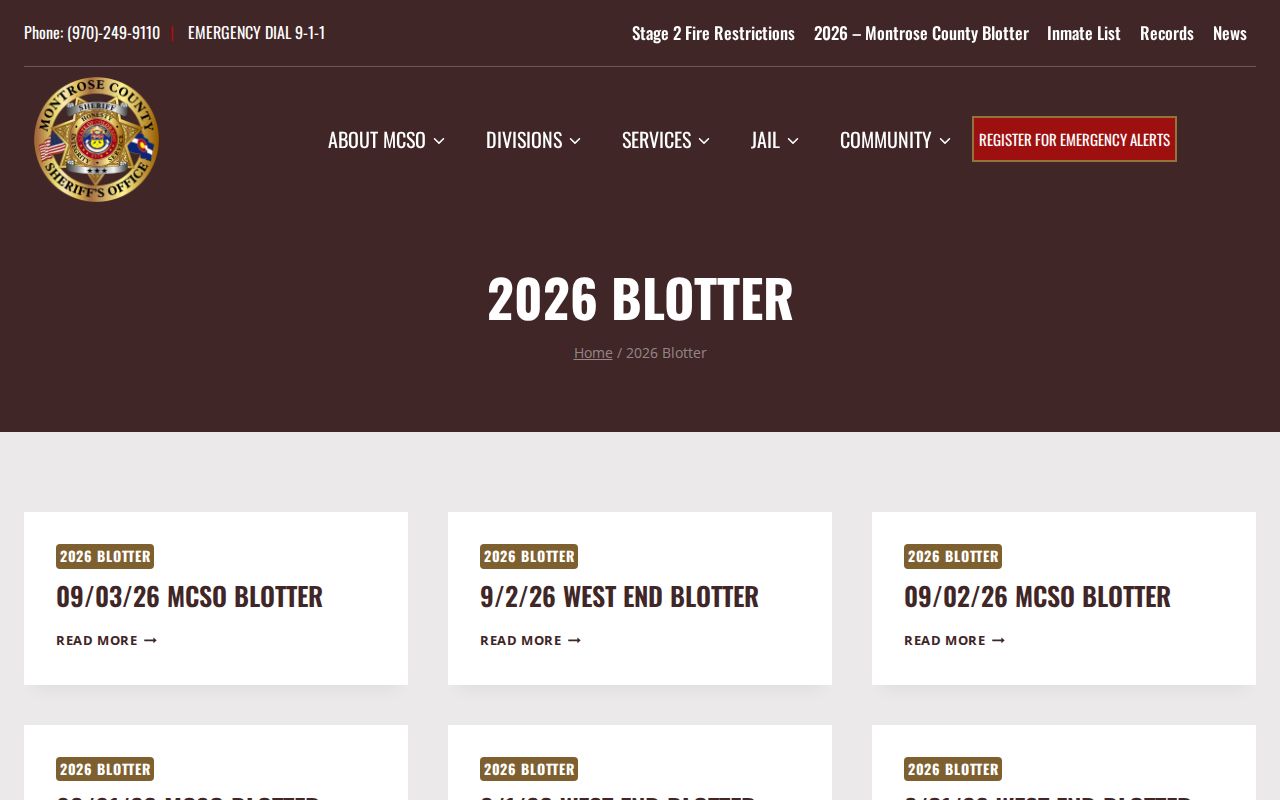
Search by date window, then file a records request.
County and City Arrest Streams
MCSO publishes the county activity and booking sections. The City of Montrose keeps its own Police Blotter folder, a daily media product with timestamps, locations, incident types, and narratives. That city stream tracks Montrose Police activity best. It is not a complete county booking list. Olathe runs a police department with no dedicated public arrest feed. Nucla and the West End lean on sheriff operations. Local outlets like the Montrose Daily Press, Montrose Mirror, We Are Montrose, and KKCO pick newsworthy incidents. They add context, not complete arrest logs. Publication can lag behind official confirmation. No outlet runs a systematic Montrose County mugshot gallery, and news photos stay tied to specific stories. The We Are Montrose correction policy spells out how that publisher sources and updates its reporting.
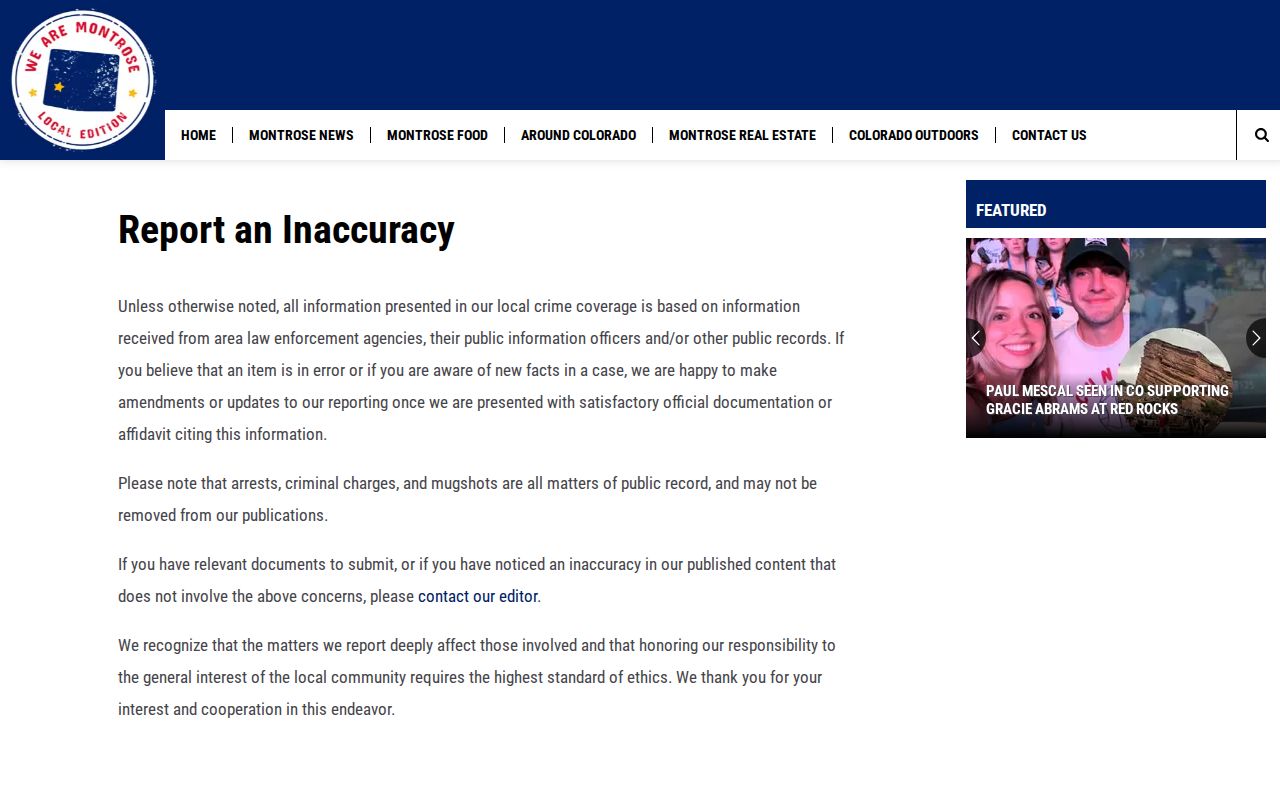
That policy governs only the publisher's own reporting, so it sets no MCSO retention rule and no court disposition.
Arrest Trends Need Care
Montrose Police year-end numbers are a city snapshot, not a county jail log. Keep that line clear. In 2025 the department recorded 193 felony adult arrests, up from 186 the year before. Misdemeanor adult arrests fell. They totaled 748 against 814 a year earlier. Drug arrests excluding marijuana dropped from 244 to 207 as well. Every figure reflects the city department's classifications and its own reporting periods. They don't map onto county jail bookings. A three-day blotter is worse for trend work. It can mix agencies, repeat related activity, and include incidents that never produced a new jail booking. Withheld cases stay invisible to a merged tally. For trends, use the cited Montrose Police statistical report and label it city-level, and for a named event use the source post.
Verify Arrest Outcomes in Court
Begin with the Montrose County recent arrests hub. It routes a named-record search through sheriff, court, state, and federal systems. The outcome of a local charge lives elsewhere. Use the Montrose County courts page, a docket search, or a document request. A disposition may show dismissal, plea, acquittal, or sentence after the blotter date. Custody needs a separate check. The dated log can persist long after release or a transfer to another facility. Confirm current custody through MCSO or VINELink. Corrections follow two different paths. For a factual error in a news report, contact the publisher with official documentation. For an MCSO record issue, identify the exact sheriff URL and the record date. Keep those routes separate. A publisher cannot change the county's record, and the county cannot edit an independent newsroom's article.